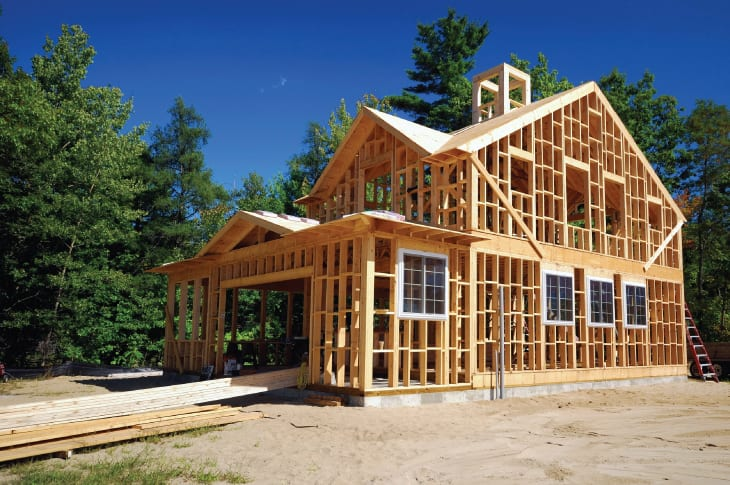
A client asked me last spring what the honest answer was on timeline. His builder had quoted him somewhere in the range of seven to nine months from groundbreaking, and he wanted to know whether to believe it. My answer was that the number was reasonable and that he should plan on the long end of it, because almost none of what decides the actual date is in the builder’s hands. Here is what actually moves it.
The part before any dirt moves
People start counting from the day they sign with a builder. The build does not start there. Between signing and groundbreaking you usually have plan finalization, a survey and site plan, and then municipal review and permitting. How long that review takes depends entirely on the municipality and what is on its agenda, and the only reliable way to find out is to call that building or planning department and ask what their current turnaround is. I ask that question on every project because the answer is different in different communities and it changes through the year.
If the lot needs a septic system or a well, add the county level approvals and the testing that go with those. If the parcel is in a subdivision with an architectural review committee, add their review of your plans too. None of these are long by themselves. Stacked up, they are often a couple of months.
The sequence once you are building
- Site work: staking, clearing, excavation, and the driveway base
- Foundation: footings, walls, backfill
- Framing: floors, walls, roof structure
- Dry in: roofing, windows, exterior doors, sheathing wrap
- Rough mechanicals: plumbing, electrical, HVAC, and the inspections for each
- Insulation and drywall
- Interior trim, cabinets, doors, and paint
- Flooring, countertops, tile, and fixtures
- Exterior finishes, grading, and landscaping
- Final inspections, occupancy, punch list
The order is not flexible. Drywall cannot go up before the rough inspections pass. Countertops are templated off installed cabinets. That rigidity is why a delay early in the sequence pushes everything behind it rather than getting absorbed.
What actually causes the slips
Weather and frost. You cannot excavate frozen ground and you cannot pour on a schedule the weather does not allow. In Wisconsin a late winter start is a real risk to the whole calendar, and a wet spring does the same thing to site work.
Selections. This is the one the buyer controls and the one that causes the most avoidable delay. Cabinets, flooring, tile, lighting, plumbing fixtures, exterior materials. Each has a lead time and a point in the sequence where it is needed. If you are still deciding on cabinets when the drywall is being finished, the house waits on you. Get a selections deadline schedule from the builder at the start and treat those dates like appointments.
Change orders. Moving a wall during framing is one conversation. Moving it after mechanicals are roughed in is a different one, and it costs time as well as money. Changes are not forbidden, they are just expensive in both currencies, and the price goes up the later you make them.
Trade availability. Your builder does not employ most of the people working on your house. Framers, electricians, plumbers, drywall crews, and finish carpenters are scheduled across multiple jobs. When one trade shows up two weeks late, the trades behind it shift too.
Inspections and utility connections. Each rough inspection is a stop, and so are the utility hookups. Those run on the municipality’s and the utility’s schedule, not the builder’s.
Materials. Most things are routine. Specialty windows, certain cabinet lines, and some appliance packages are not, and a long lead item ordered late will hold up the finish stretch.
How I plan a timeline with a client
| Stage | Who controls it | What to ask |
|---|---|---|
| Permitting | Municipality | What is your current review turnaround |
| Site work | Weather and the excavator | What is the realistic groundbreaking window |
| Shell | Builder and trades | When do you expect to be dried in |
| Selections | You | What are my decision deadlines, in writing |
| Finish | Trades and lead times | What has a long lead time on my list |
| Occupancy | Inspectors and utilities | What has to pass before I can move in |
Plan your move around the date you are dried in, not the date you signed. Everything before the shell is up is the part most likely to move.
What this means if you are selling first
This is where timelines turn into real money. If you are selling an existing home to build, do not set your closing against the builder’s initial estimate. Build in a cushion, or arrange for a place to land in between. I have watched more stress come from that one gap than from anything that happened on the job site. A construction loan has its own structure and draw schedule as well, and your lender is the one to explain how that lines up with your sale.
If you are looking at building in southeastern Wisconsin and want help reading a builder’s schedule, checking what permitting looks like in that specific municipality, or lining up a sale against a completion date, reach out. I would rather have that conversation before you sign than untangle it after.