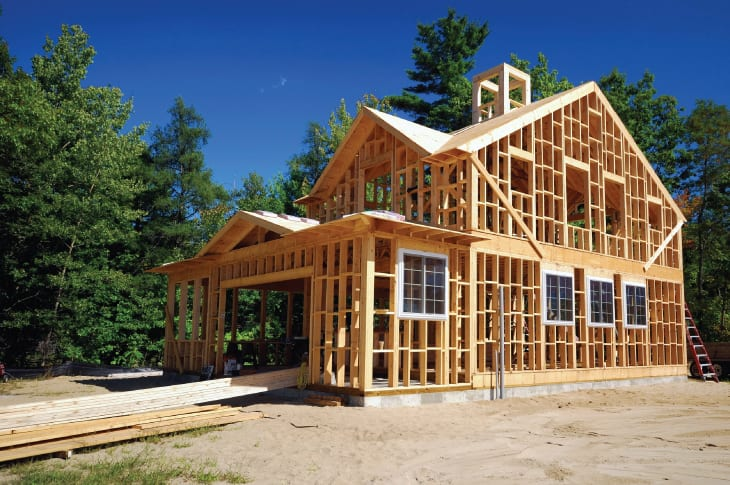
The most common budgeting mistake I see is simple arithmetic. Someone finds a lot for $150,000, likes a builder’s plan priced at $450,000, and writes down $600,000.
That number is almost never what the project costs. Between buying the dirt and getting a key, there is a whole category of expense that has nothing to do with the house itself, and on the wrong parcel it runs well into six figures.
The real equation
A build is not two numbers. It is closer to seven.
| Component | What it covers |
|---|---|
| Land | The purchase price of the lot or parcel |
| Site development | Clearing, excavation, grading, fill, erosion control |
| Utilities | Sewer and water connection, or a well and septic system |
| Access | Driveway, culvert, and any required road or highway permits |
| Permits and fees | Building permits, impact fees, connection charges |
| The home | The builder contract, allowances and change orders |
| Finishing | Landscaping, final grade, seeding, driveway surface |
Most people account for the first and the sixth. The rest is where budgets go sideways.
Site work is the number nobody quotes you
Site work varies more than any other line and gets estimated least. It is also the one category that depends entirely on the specific parcel, which means no builder can quote it accurately until someone has actually looked at your ground.
At one end is a finished subdivision lot. Municipal sewer and water at the street, a flat build pad, a short driveway, soil that was already evaluated when the subdivision was platted. Site costs there can be modest and reasonably predictable.
At the other end is raw rural acreage. Now you may be looking at a well, a mound septic system because the soils will not support a conventional one, four hundred feet of driveway, a culvert, bringing power in from the road, clearing, and significant fill to create a level pad. That gap between the two ends is not a rounding error. It can be the price of a second garage.
A cheap lot with expensive site work is not a cheap lot. The parcel that looks like a bargain is sometimes the one that costs the most to build on.
This is why I push people to understand the property before they fall in love with it. Zoning, covenants, utilities, soils and perc, access, wetlands and grading all feed directly into that site development number. None of those are things I certify. My job is knowing which questions have to be answered, who answers them, and what each answer does to your budget.
Allowances, and why change orders surprise people
The second budget surprise is quieter and shows up later.
Builder contracts carry allowances: a dollar figure set aside for flooring, cabinets, lighting, plumbing fixtures and the like. Those numbers are frequently set at a level below what buyers actually choose once they are standing in a selection showroom. The difference becomes a change order, and change orders accumulate.
This is not a builder being sneaky. Allowances keep base prices comparable across plans. But it does mean the contract price and your final price are two different numbers, and the gap is in your control only if you know it exists.
A fair question to ask any builder
“What is in your base price, what is an allowance, and what is excluded entirely?”
The answer tells you more about your real budget than the headline number does. A builder who answers it clearly and specifically is telling you something useful about how the rest of the project will go.
What to do with this
Build the whole equation before you commit to a lot, not after. That means getting a written site work estimate rather than a guess, confirming utilities and soils, and reading the allowance schedule in the contract alongside the price.
Done early, all of this is cheap. The conversations cost nothing and the testing costs far less than the problems it prevents. Done late, you are making expensive decisions under pressure with a foundation already in the ground.
If you are working through a specific parcel or comparing two builders right now, send me the details. I will tell you what I see, and if the honest answer is that the numbers do not work, I will tell you that too.