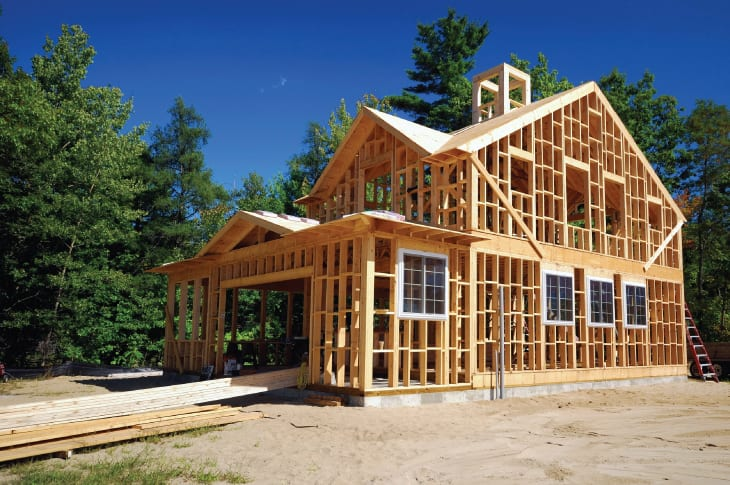
The first thing I ask somebody who tells me they want to build is whether they want to pick a house or draw one. Those are very different projects, with different timelines, different money and very different demands on your attention. Almost everybody who says new construction in southeastern Wisconsin ends up in one of three lanes, and figuring out which lane you are in early saves months of touring the wrong thing.
Spec home: the builder already decided
A spec home is a house the builder started, and often finished, before there was a buyer. The builder owned or controlled the lot, picked the plan, and chose the finishes. You are buying a house, not a process.
If you catch one early, while it is framed and before drywall, you can sometimes still pick flooring, paint and a few fixtures. If it is done, you are buying what is there. The upside is real: you can walk the actual house, the price is the price, the completion date is close and knowable, and you are getting a normal mortgage rather than a construction loan. The trade is that you did not choose anything, so you are living with somebody else’s taste in a kitchen you will look at every day.
To be built: the builder’s plan, your lot, your selections
This is the most common path in our area. A builder has a set of plans they build over and over, and lots inside a plat they own or have tied up. You pick a plan, pick a lot, and then go through a selections process inside the builder’s option list and allowances.
Price here is not one number. It is the base plan, plus the lot, plus site costs, plus whatever you add during selections. The plan sheet and the final contract are usually two fairly different documents. This is also where change orders live, and where almost all of the budget surprises happen.
Custom: your plan, your lot, your builder
Custom means you bring the plan, usually from an architect or designer, and a lot you own or are buying. The builder bids it and builds it. Everything is a decision, which is the whole point and also the whole cost.
It is the longest timeline, the most meetings, and the most exposure to material and labor pricing over the life of the build. It is also the only version that gets you a house designed for the specific piece of ground, which matters a lot on a sloped lot, a lake lot, or acreage where you want the house aimed at something.
Side by side
| Spec | To be built | Custom | |
|---|---|---|---|
| Who picks the plan | Builder | You, from the builder’s plans | You, with a designer or architect |
| Who picks the lot | Builder | You, from available lots | You, anywhere you can buy |
| Selections | Mostly done | Builder’s option list | Open |
| Timeline | Shortest | Middle | Longest |
| Financing shape | Standard mortgage | Often a builder program | Construction loan |
| Your time involved | Low | Moderate | High |
Where people get surprised
- Allowances are budgets, not inclusions. An allowance for flooring is a dollar figure the builder set. If what you want costs more, the difference is yours, and it shows up in the contract total later.
- Change orders get expensive as the house goes up. Moving a wall on paper is a conversation. Moving it after framing is labor, material and schedule.
- The lot is a cost, not a given. Site work, grading, driveway, and on rural parcels a well and septic system, are real line items. Whether they are inside the builder’s number or outside it is one of the first questions to ask.
- Completion dates move. Weather, inspections and trade scheduling all push. Build margin into your plan, especially if you are selling a house to fund the build.
- A construction loan is a different animal. Draws, inspections and interest during the build all work differently than a purchase mortgage. That is a conversation for the lender who would actually write it, not for me.
- The agent in the model home works for the builder. That is normal and expected. They are the right person for questions about the plans, the options and the community.
Read the contract before you fall in love with a plan. The plan is the fun part. The contract is the part that decides what the house costs.
Picking a lane
If you need to be in a house on a known date and you can live with someone else’s finishes, look at specs. If you want a say in the house without running a project, to be built is usually the right fit, and most of your energy should go into choosing the lot and reading the option pricing carefully. If the land is unusual, or you have a layout in your head that nobody’s plan book has, custom is the honest answer, and you should budget time as seriously as you budget money.
I will also tell you when building is the wrong call. If your timeline is tight, your budget has no cushion, or you need to sell first and cannot carry two payments, a resale house is often the better move. I would rather say that up front than halfway through a build.
If you are weighing these three, tell me your timeline, the area you are looking at and whether you already have a lot. I will lay out what each path would actually look like for you and point you to the lender, surveyor or attorney for the pieces that are theirs to answer. Broker compensation is not set by law and is fully negotiable. We put the arrangement in writing before we tour anything.